









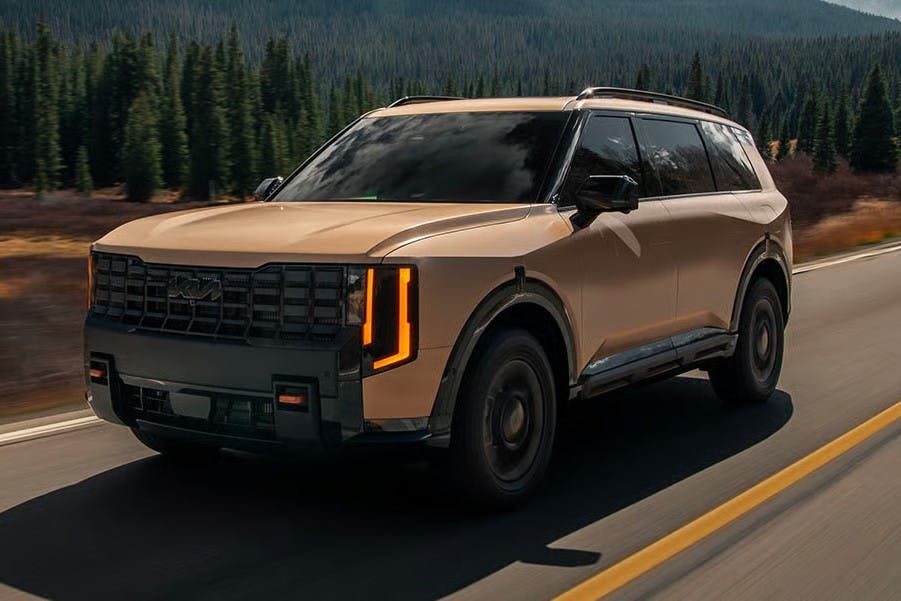
Hyundai Palisade vs. Kia Telluride: SUV Comparison
If you’re shopping for a mid-size, three-row SUV, chances are the Hyundai Palisade and Kia Telluride are already on your shortlist—and for good reason. These two SUVs have long been sibling rivals under the same corporate umbrella, sharing platforms and engineering while maintaining distinct personalities.
Now, both models are entering new chapters. The Hyundai Palisade was redesigned for the 2026 model year, while the second-generation Kia Telluride has just been unveiled as a 2027 model. With fresh styling, new powertrain options, and expanded trim lineups, here’s how they compare in the areas that matter most.
Size, Seating, and Cargo Space
On paper, the Palisade and Telluride are nearly identical in size. Both ride on the same 116.9-inch wheelbase, and overall length is essentially a wash: the Telluride measures 199.2 inches long, while the Palisade ranges from 199.2 to 200.4 inches depending on trim. Width is also separated by only fractions of an inch.
Inside, both SUVs come standard with three rows of seating. Lower trims use a second-row bench seat, allowing for eight-passenger capacity. Mid-level trims switch to second-row captain’s chairs, reducing seating to seven but improving comfort and access to the third row.
Where the Kia gains a slight edge is cargo space:
Behind the third row:
- Telluride: 22 cubic feet
- Palisade: 19 cubic feet
With the third row folded:
- Telluride: 49 cubic feet
- Palisade: 46 cubic feet
Maximum cargo capacity:
- Telluride: 89 cubic feet
- Palisade: 87 cubic feet
The differences aren’t dramatic, but the Telluride consistently squeezes out a bit more room.
Engines, Hybrids, and Towing
One of the biggest changes for this generation is the introduction of hybrid powertrains for both models. The shared hybrid setup pairs a turbocharged 2.5-liter four-cylinder engine with a six-speed automatic transmission and two electric motors. Total system output is 329 horsepower, and all-wheel drive comes standard with the hybrid.
Where the two diverge is in their base engines:
Hyundai Palisade:
- 3.5-liter naturally aspirated V-6
- 287 horsepower, 260 lb-ft of torque
- Eight-speed automatic
- Front-wheel drive or all-wheel drive
Kia Telluride:
- 2.5-liter turbocharged four-cylinder
- 274 horsepower, 311 lb-ft of torque
- Front-wheel drive or all-wheel drive
The Hyundai offers the smoother, traditional V-6, while the Kia counters with more low-end torque from its turbo-four.
Towing capacity is identical for both non-hybrid models at 5,000 pounds. Hybrid versions tow slightly less:
- Telluride Hybrid: 4,500 pounds
- Palisade Hybrid: 4,000 pounds
All-wheel-drive versions include a dedicated tow mode that adjusts transmission behavior for hauling.
Fuel Economy
As expected, the hybrids are the fuel-efficiency leaders. At the time of writing, EPA ratings are available only for the Palisade Hybrid:
- Front-wheel drive (Blue trim): 33 mpg city / 35 mpg highway
- Other FWD trims: 31 mpg city / 32 mpg highway
- All-wheel drive: 29 mpg city / 30 mpg highway
For gas-only models, the numbers are closer than you might expect given the engine differences:
AWD (both models): 18 mpg city / 24 mpg highway
FWD:
- Telluride: 20 / 26 mpg
- Palisade: 19 / 25 mpg
Off-road trims take a small hit, with the Palisade XRT Pro rated at 16/22 mpg and the Telluride X-Pro at 17/22 mpg.
Off-Road Trims: XRT Pro vs. X-Pro
Both brands now offer more rugged-looking variants aimed at light off-road use:
- 18-inch wheels with all-terrain tires
- Electronic limited-slip rear differential
- Off-road drive modes
- Recovery tow hooks
- Under-vehicle camera system (usable up to 6 mph)
The Telluride X-Pro has slightly more ground clearance at 9.1 inches, compared to 8.4 inches for the Palisade XRT Pro. Neither model includes skid plates, so these trims are better suited for dirt roads and snow than serious rock crawling.
Pricing and Trim Levels
Both SUVs offer a wide—and sometimes overwhelming—range of trims.
2026 Hyundai Palisade (gas):
- 7 trims
- Prices range from $41,035 to $56,160
Palisade Hybrid:
- 7 trims (with some differences from gas models)
- Prices range from $45,760 to $58,380
2027 Kia Telluride (gas):
- 10 trims
- Prices range from $40,735 to $58,335
Telluride Hybrid:
- 5 trims
- Pricing not yet announced, but expected to cost $1,000–$2,000 more than comparable gas models
In practice, pricing between the two brands is extremely close across the lineup.
Final Thoughts
The Hyundai Palisade and Kia Telluride remain two of the most closely matched SUVs on the market. They share platforms, offer similar space and technology, and now both provide hybrid options for buyers prioritizing efficiency.
The key differentiator comes down to powertrain philosophy and design preference. Hyundai sticks with a traditional V-6 for its base engine, while Kia leans into a turbocharged four-cylinder. Beyond that, styling and brand feel may ultimately matter more than specs. Either way, shoppers can’t really go wrong—these siblings continue to push each other to be better.
