












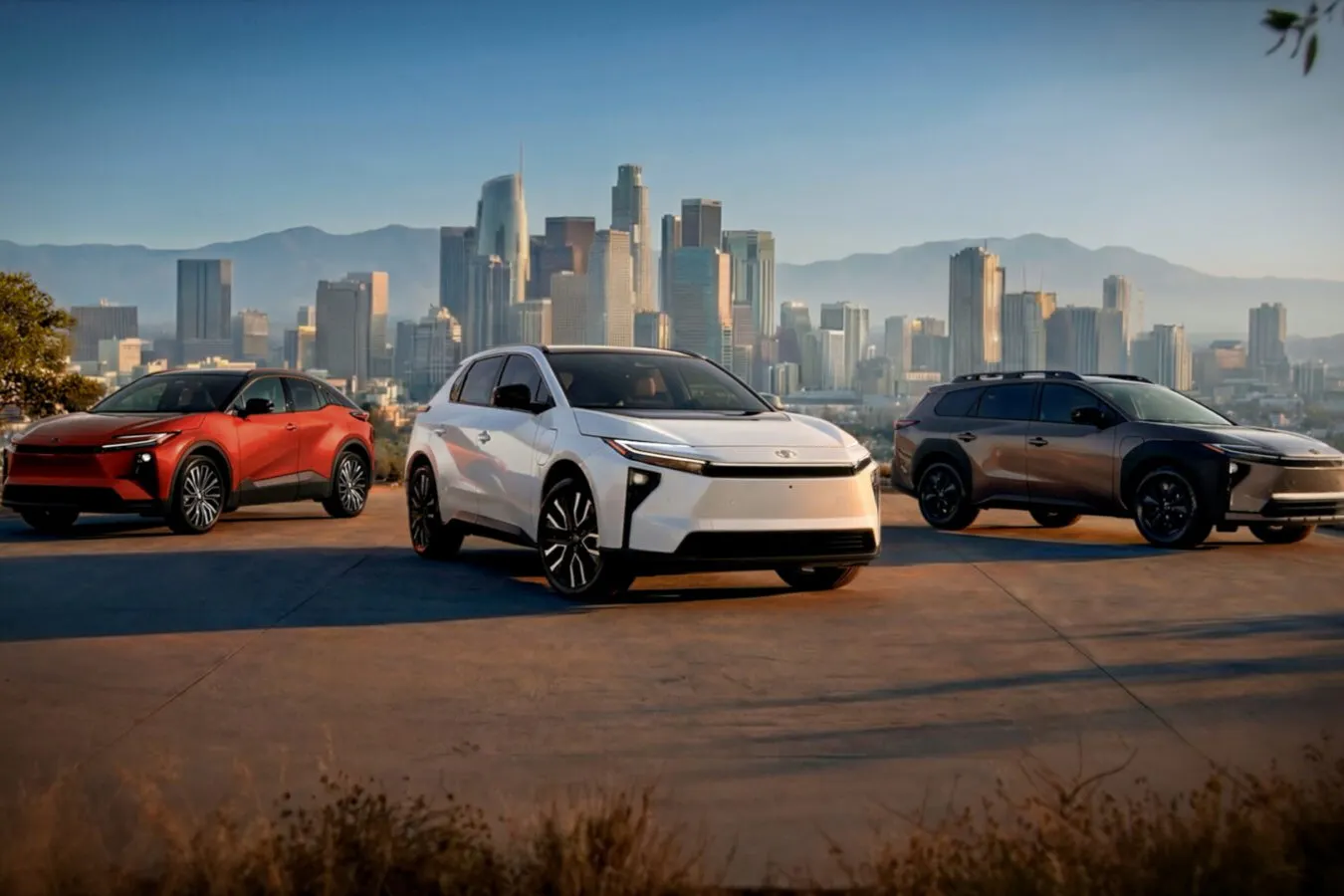
Exploring Toyota’s EV Lineup
The global shift toward electric vehicles (EVs) has pushed automakers to rethink their strategies, and Toyota Motor Corporation is no exception. Long known for pioneering hybrid technology with the Prius, Toyota has taken a more measured approach to fully electric vehicles. However, its latest lineup shows a clear pivot toward battery-electric innovation, with new models, improved performance, and expanded capabilities. In this blog post, we’ll explore Toyota’s electric vehicle lineup, focusing on its current offerings, upcoming models, and what they mean for the future of sustainable mobility.
Toyota’s Approach to Electric Vehicles
Toyota has historically prioritized hybrids and hydrogen fuel-cell vehicles over fully electric cars. While competitors raced ahead with EV-only platforms, Toyota focused on reliability, scalability, and long-term infrastructure readiness. That strategy is now evolving as consumer demand for Toyota electric vehicles increases worldwide.
The company’s EV branding centers around the “bZ” (Beyond Zero) sub-brand, which represents Toyota’s vision of zero-emissions mobility combined with enhanced driving experiences. This shift signals Toyota’s growing commitment to the EV market while maintaining its reputation for durability and efficiency.
The Toyota bZ: Core of the Electric Lineup
At the heart of Toyota’s EV lineup is the Toyota bZ (formerly known as the bZ4X), a compact electric SUV designed to compete with popular models like the Tesla Model Y and Ford Mustang Mach-E.
Performance and Range
The 2026 Toyota bZ represents a major upgrade over earlier versions. It offers both front-wheel-drive and all-wheel-drive configurations, with power outputs reaching up to 338 horsepower in AWD models. Range has also improved significantly, with some trims delivering up to 314 miles on a single charge, making it far more competitive in the EV segment.
Charging and Technology
Toyota has enhanced charging capabilities with faster DC charging and the addition of a North American Charging Standard (NACS) port, enabling access to Tesla’s Supercharger network. Inside, drivers benefit from a modernized cabin featuring a 14-inch touchscreen, wireless smartphone integration, and advanced driver-assistance systems under Toyota Safety Sense.
Why It Matters
The Toyota bZ is more than just a single model—it’s the foundation of Toyota’s EV strategy. With improved range, better performance, and competitive pricing, it signals Toyota’s serious entry into the electric SUV market.
Toyota bZ Woodland: Rugged Electric Capability
For drivers seeking adventure-ready electric vehicles, Toyota introduced the Toyota bZ Woodland—a more rugged variant of the standard bZ.
Built for Versatility
The bZ Woodland stands out with:
- Dual-motor all-wheel drive
- Up to 375 horsepower
- Approximately 281 miles of range
- 3,500-pound towing capacity
It also features increased ground clearance and off-road capabilities, making it suitable for outdoor enthusiasts.
Position in the Lineup
This model reflects Toyota’s strategy of diversifying its EV offerings. Rather than a one-size-fits-all approach, Toyota is tailoring electric vehicles for different lifestyles—from urban commuting to off-road exploration.
Toyota C-HR EV: A Stylish Compact Option
Another exciting addition is the Toyota C-HR EV, a fully electric revival of the C-HR nameplate.
Key Highlights
- Dual-motor AWD system producing around 338 horsepower
- Estimated range of up to 287 miles
- Coupe-like design for a sportier appearance
The C-HR EV targets younger buyers and urban drivers who prioritize style, performance, and practicality in a compact package.
Market Impact
With its bold design and strong performance, the C-HR EV helps Toyota compete in the increasingly crowded compact EV crossover segment.
Future Models: Expanding the Toyota EV Portfolio
Toyota’s electric ambitions go beyond its current lineup. One of the most anticipated upcoming models is the Toyota Highlander EV, expected to launch as a three-row electric SUV.
What to Expect
- Up to 320 miles of range
- Seating for six or seven passengers
- Advanced infotainment and safety features
This model will allow Toyota to compete in the growing family-oriented EV segment, rivaling vehicles like the Kia EV9 and Hyundai Ioniq 9.
Broader Strategy
Toyota plans to expand its EV lineup globally, introducing more models across different price points and vehicle types. This includes sedans, SUVs, and possibly electric trucks.
Toyota EV Technology and Innovation
Toyota’s electric vehicles are not just about switching from gas to batteries—they represent a broader technological evolution.
Battery Advancements
Toyota is investing heavily in next-generation battery technology, including solid-state batteries, which promise:
- Faster charging times
- Longer driving ranges
- Improved durability
While not yet widely available, these advancements could give Toyota a competitive edge in the future EV market.
Charging Infrastructure
By adopting the NACS charging standard, Toyota ensures compatibility with one of the largest charging networks in North America. This move addresses one of the biggest concerns for EV buyers: charging accessibility.
How Toyota EVs Compare to Competitors
Toyota’s electric vehicles are entering a competitive landscape dominated by brands like Tesla, Hyundai, and Ford. While Toyota was slower to launch EVs, its newer models show significant improvements.
Strengths of Toyota EVs include:
- Reliability and build quality
- Competitive pricing
- Strong dealer network
The Future of Toyota Electric Vehicles
Toyota’s EV lineup is still evolving, but the direction is clear. With models like the Toyota bZ, bZ Woodland, and C-HR EV, the company is building a diverse portfolio that caters to different drivers and lifestyles. Looking ahead, Toyota’s investment in battery technology, expanded lineup, and global production capabilities suggests that it will play a major role in the future of electric mobility.
Final Thoughts
Toyota’s journey into electric vehicles reflects a balance between innovation and caution. While it may not have been the first to dominate the EV space, its latest lineup shows a strong commitment to catching up—and potentially leading in key areas like reliability and battery technology.
For consumers considering Toyota electric vehicles, the current lineup offers a compelling mix of practicality, performance, and forward-thinking technology. As Toyota continues to expand its EV portfolio, it’s clear that the company is moving beyond hybrids and firmly into an electric future.
